
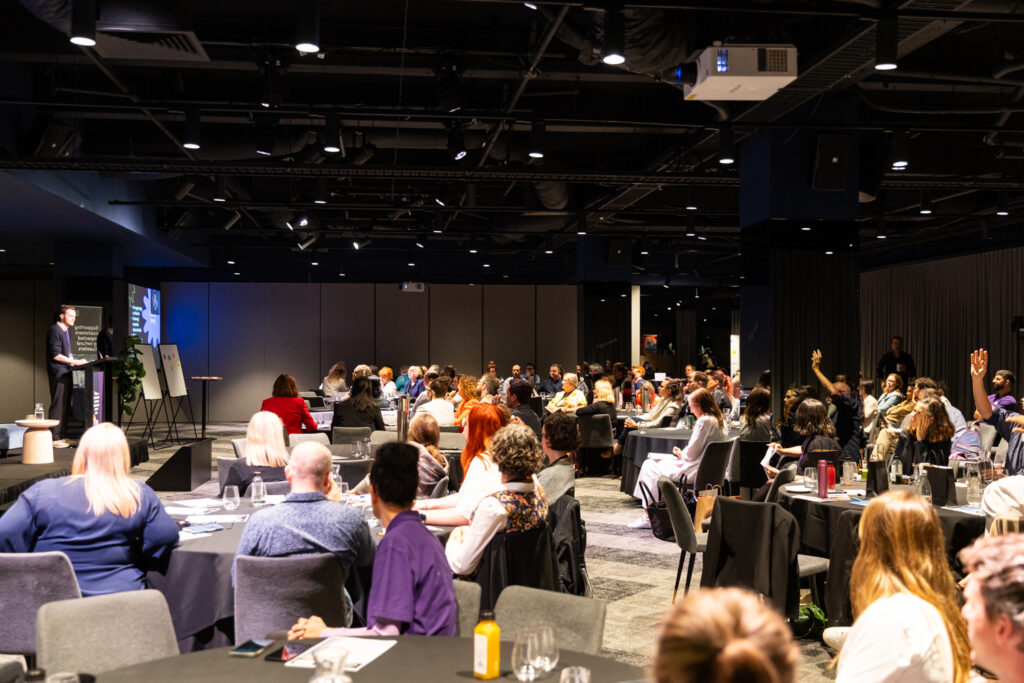
The FCVic 2026 Community Disaster Resilience Summit brought together leaders, practitioners and communities from across the disaster resilience ecosystem for a day of deep discussion. What emerged was something powerful: a shared commitment to doing better, together.
Across the day, several themes resonated strongly:
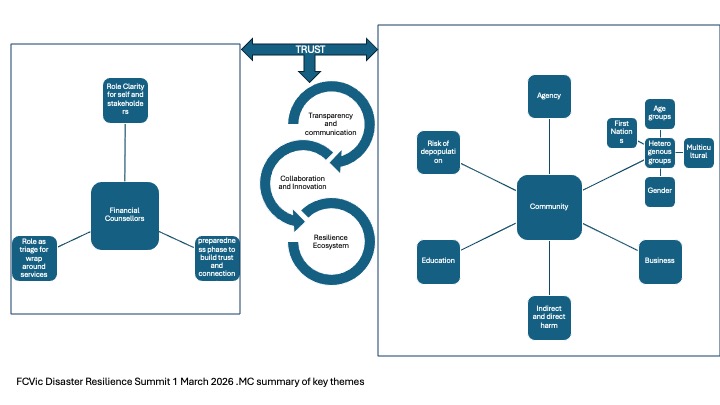
1. Transparency and communication
We heard clearly that trust is built well before disaster strikes. Open, consistent and accessible communication is critical — not just in crisis, but in preparedness and recovery.
2. Collaboration and innovation
Disaster resilience cannot sit within silos. The complexity of modern disasters demands cross-sector collaboration, new thinking and a willingness to challenge traditional approaches.
3. A connected resilience ecosystem
From government and industry to community services and grassroots organisations, resilience depends on strong relationships, shared responsibility and coordinated action.
4. The vital role of financial counsellors
Financial counsellors are on the frontline of disaster recovery, supporting people to navigate financial hardship, rebuild stability and regain control. Their role is essential not only in recovery, but in strengthening disaster preparedness and long-term resilience.
As highlighted throughout the Summit, disasters don’t end when the immediate crisis passes. Their impacts are felt across housing, financial wellbeing, mental health and community connection, often for years to come.
That’s why spaces like this matter. The Summit wasn’t just a conversation. It was a call to action. A reminder that resilience is built through relationships, through shared knowledge, and through collective effort.
To everyone who joined us: thank you for your generosity, your honesty and your commitment to stronger communities.
The work continues, and we’re proud to be part of it alongside you.
Recap of the day
The Summit opened with an introduction from MC Dr Jacki Johnson, setting the context for the day and recognising the increasing frequency and complexity of disasters across Victoria and beyond.
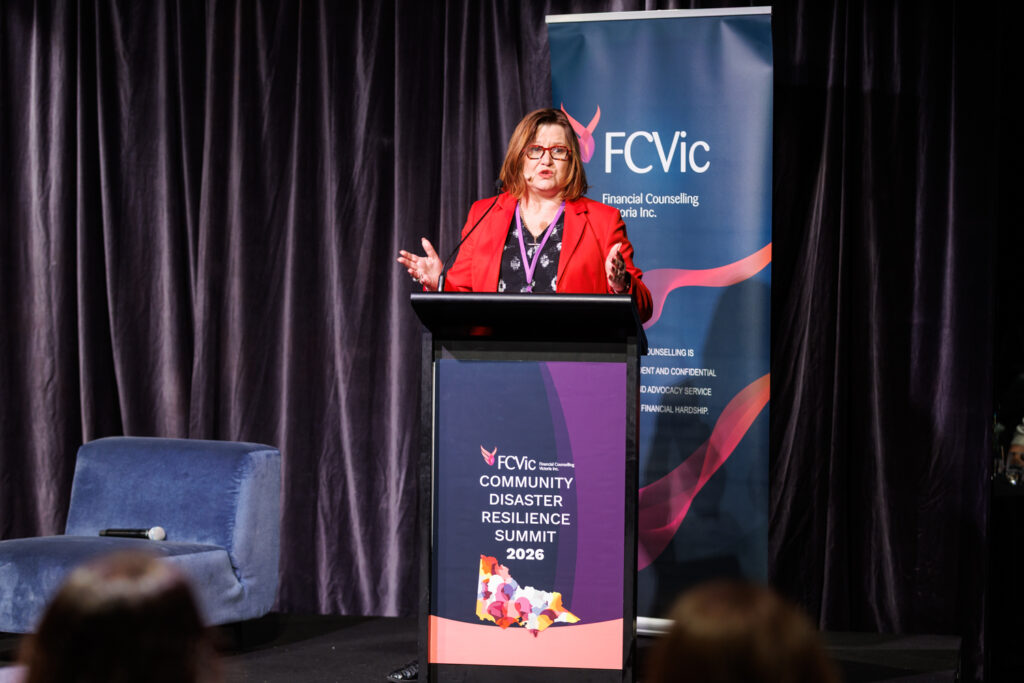
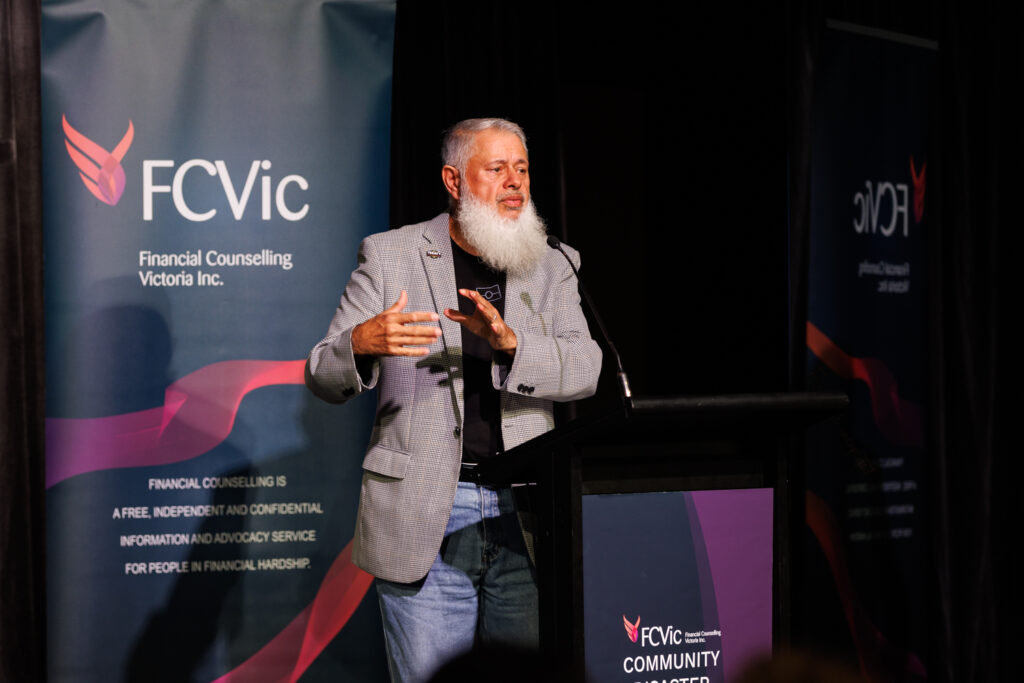
A powerful and moving Welcome to Country delivered by Uncle Andrew Gardiner highlighted the important connection of First Nations communities to land and country. Reflecting on his own experiences of the Shepparton floods as a farmer, and the dramatic increase to his own insurance premiums in the aftermath, Uncle Andrew Gardiner supported the importance of the day in opening up conversations to find solutions.
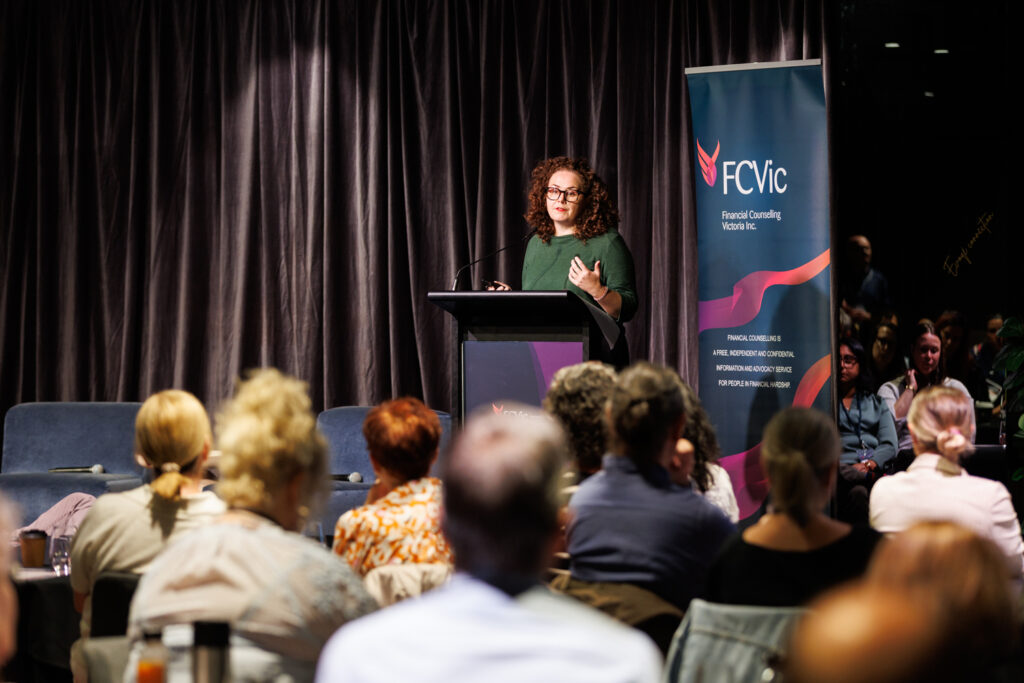
The keynote speech by Dr Kate Brady from UNSW highlighted the impact that disasters can have on every aspect of people’s lives. Its impacts on ‘pleasure and leisure’ resonated deeply with the audience – responding to disasters can often be focused on the practical actions, but the joy in life is built in the ‘pleasure and leisure’. She spoke about the difficult non-linear journey of recovery, compounded when events happen regularly, and when individual experiences before, during and after a disaster event can vary greatly.
Importantly, and setting the scene for the day, Dr Kate Brady highlighted the need for a coordinated, whole of system response to support people before, during and long after disasters.
Community must be at the heart of disaster response and resilience.
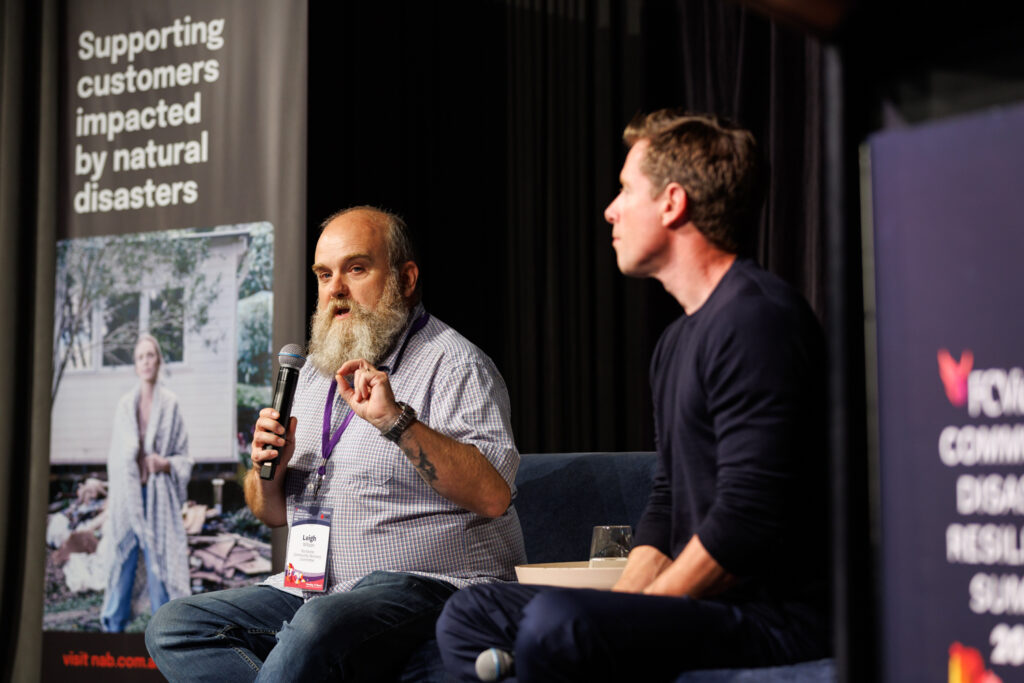
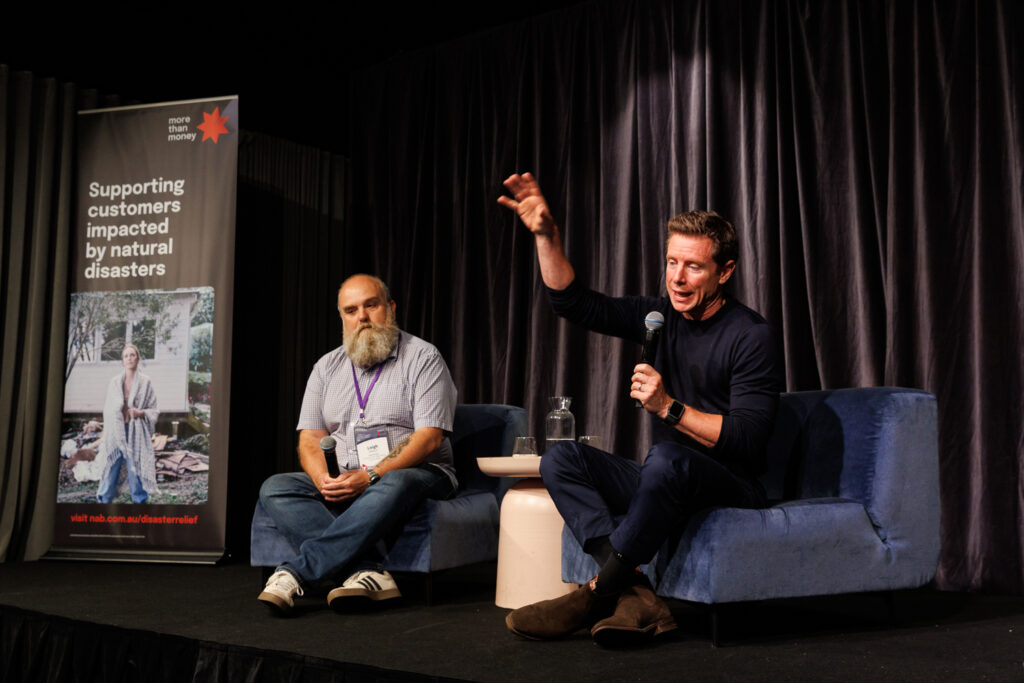
Leigh Wilson and Scott Pape shared their respective experiences of the Rochester floods and Kyneton fires – what it felt like before, during and after the event, and what were the measures that really impacted recovery. The importance of community-led recovery was highlighted by Leigh, and the life-changing role of financial counsellors shared by Scott.
The ‘new normal’ came up often in conversation – that often those who have been through a disaster just want to get back to normal, but there is no normal anymore. There’s only a ‘new normal’.
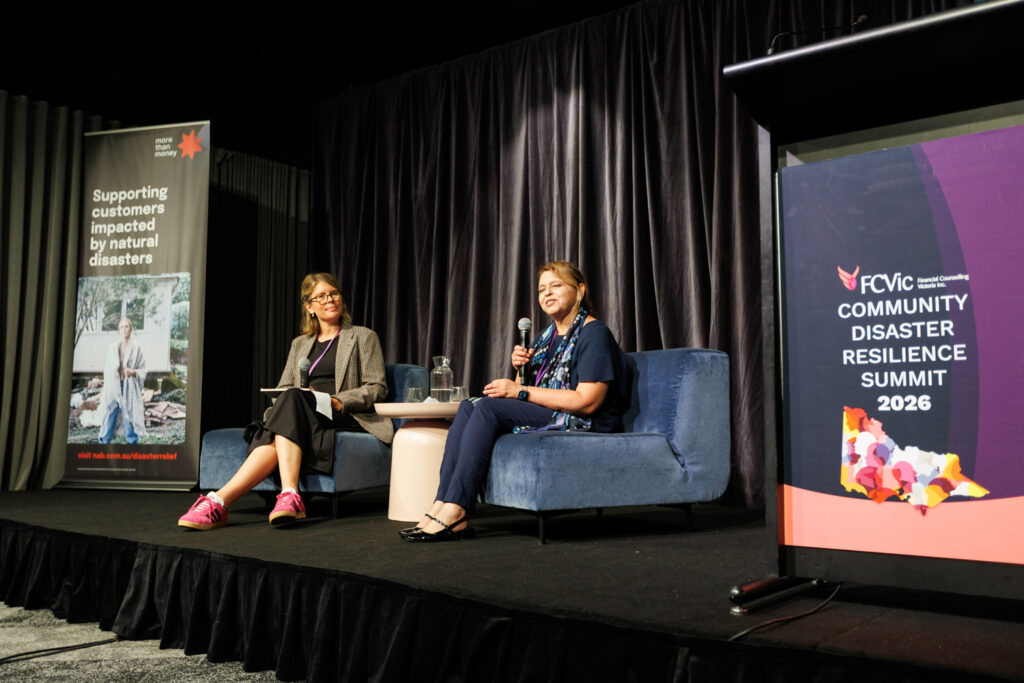
After a short break, Leanne Berard from Financial Counsellors’ Association of Western Australia shared their Disaster Preparedness, Response and Recovery Framework, and how it strengthens disaster resilience by equipping financial counsellors to confidently support communities before, during and after crises.
In discussion with Victorian financial counsellor Emma Brelsford, Leanne reflected on the unexpected benefits of this Framework, including how financial counselling is now incorporated by government and other community sector stakeholders in disaster planning, and discussed how the Framework can be adopted across other jurisdictions.
This was followed by the launch of FCVic’s Victorian Financial Counselling Sector Activation Plan. This Plan is intended to manage the centralised coordination and communication of the financial counselling sector following a disaster event. Its purpose is to enable the financial counselling sector to deliver dynamic responses and mitigation initiatives to support recovery for households and communities in Victoria.
The Plan outlines the practical arrangements required to activate the financial counselling sector in disaster contexts. It covers roles and responsibilities, service coordination, referral pathways and communication processes. It ensures consistent, timely and effective support throughout all phases of response and recovery.
Kellie Davis, FCVic’s Disaster Recovery Lead then took to the stage. She emphasised that disaster recovery is complex with individuals facing overlapping financial, legal, and social challenges, requiring support from multiple sectors. Despite this, current systems remain siloed, with collaboration often informal and reactive. She highlighted that trust and partnerships must be built before disasters occur, not during them, and that a more coordinated, proactive approach is essential.
She argued that true collaboration creates a ‘dividend’: faster recovery, reduced conflict, lower costs, and less worker burnout. Drawing on examples of cross-sector engagement, she showed how openness and shared purpose break down barriers, calling for commitment to a sustained, structured collaboration network, and urging all sectors to commit to ongoing partnership and collective action.
Marshida Kolthoff from Council of the Ageing Victoria shared a presentation on their soon-to-be-released Age-Inclusive Emergency Preparedness Guideline.
Victoria’s ageing population is growing faster than emergency systems are adapting, leaving older people, especially in regional areas, more exposed to disaster risks. Marshida outlined practical, staged recommendations to build age-inclusive disaster systems, from low-cost local actions to long-term reforms. These emphasise equity, community partnerships, and evidence-based planning.
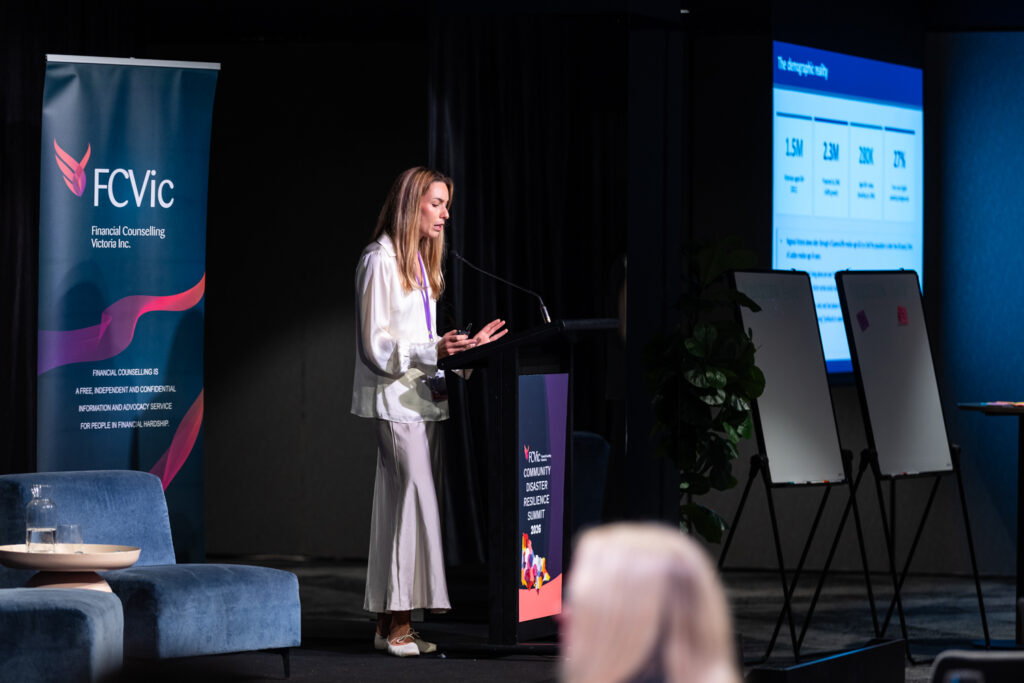
Patrick White, a rural financial counsellor with Rural Financial Counselling Service Vic West / Finwell spoke about the importance of supporting small business and rural business challenges in preparing for and responding to disasters. He drew from his two decades of experience working across disaster events starting with the millennium drought and including the Grampians fires recently.
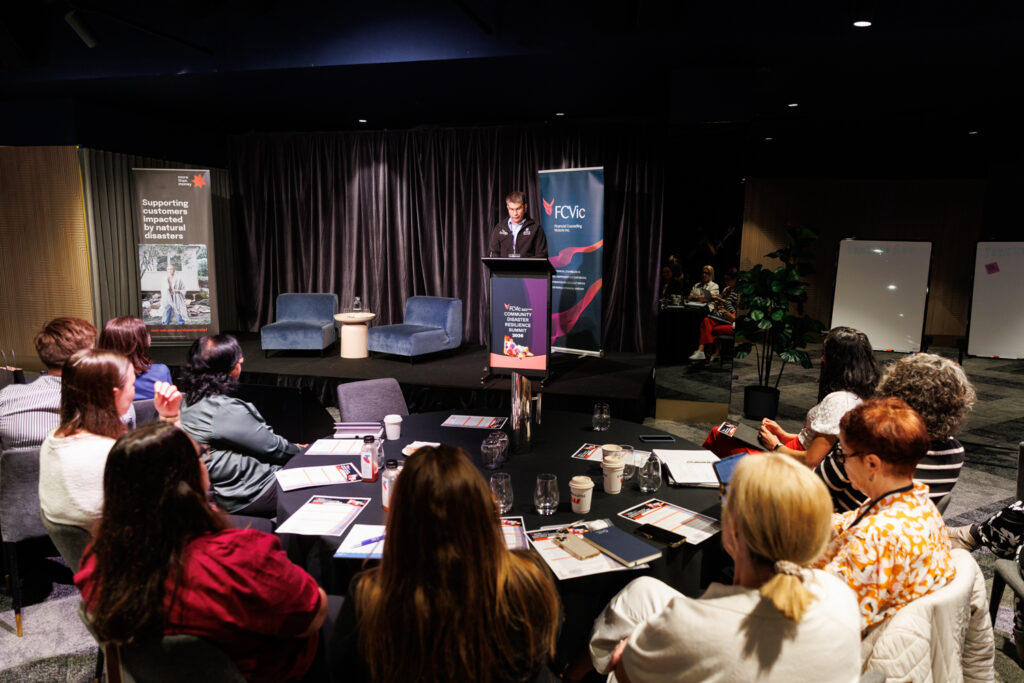
In the afternoon, Soraya Dean representing Summit Premier Partner NAB outlined their ‘Ready Together’ program, focused on helping Australians prepare for and recover from natural disasters through partnerships, funding, and direct customer support.
NAB emphasised its ability to provide immediate financial relief through disaster grants and hardship support, including loan deferrals, fee waivers, and flexible repayments. Expanded community grants aim to fund recovery, preparedness, and infrastructure projects, strengthening long-term resilience.
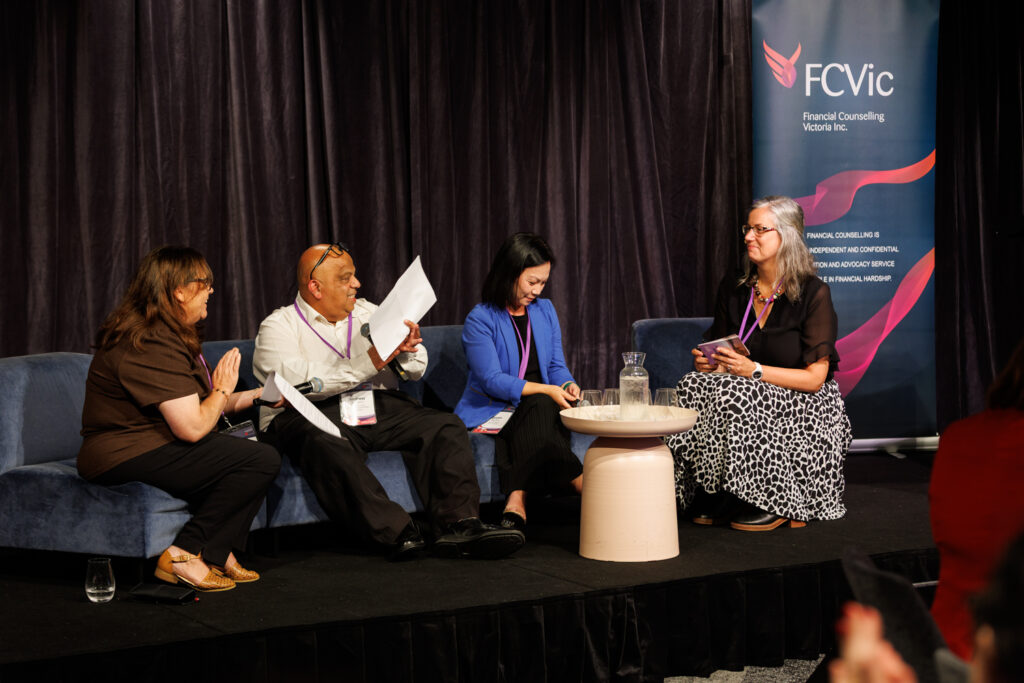
A panel discussion led by Wennie van Riet from GenWest, with Kathryn Swinton, financial counsellor from Anglicare Victoria and community members Andrew Monteiro and Quyen Nguyen drew on the Maribyrnong floods, to show how recovery must go beyond immediate aid, starting with deep listening and culturally informed engagement. They illustrated how community trust was built through local leaders, revealing major stressors like insurance challenges, which significantly impacted mental health and wellbeing.
Quyen and Andrew’s personal reflections on their work with GenWest in supporting communities after the floods showed how empowering communities as partners leads to more effective, trusted, and lasting recovery solutions. This approach produced practical outcomes including the Flood Insurance Guide. Quyen’s sharing of the growth of her own confidence in managing insurance issues post-flood, was testament to the importance of this bilingual resource.
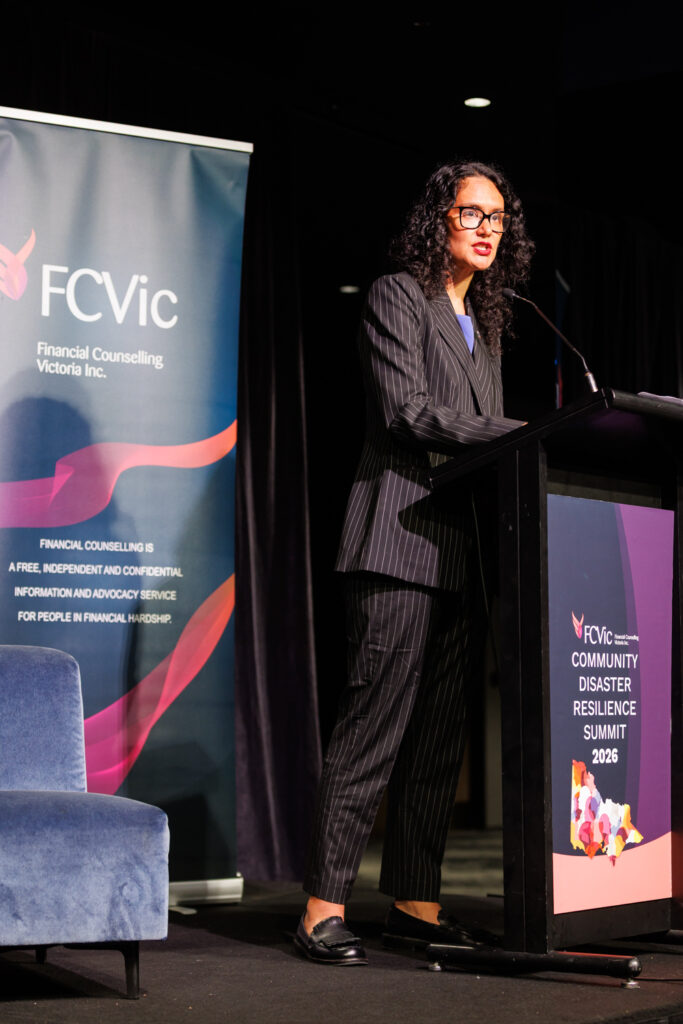
Jack Piper from ARC Justice shared insights from their engagement with regional flood-affected communities through interviews, surveys, and public forums, which sought to understand how common it is for people to not have flood cover, where they see unfairness in the system, the impact of rising premiums, and what they think needs to change.
Jack’s point about community harm was recognised by the Summit audience – that when households have reduced access to insurance, the structure of small communities change as people move away, streetscapes change, and social harms of poor health and inadequate housing are amplified.
It presented critical needed changes proposed by the people of Shepparton through this research – subsidisation of insurance, investment in risk reduction, increasing premium transparency, building housing resilience and proactive planning.
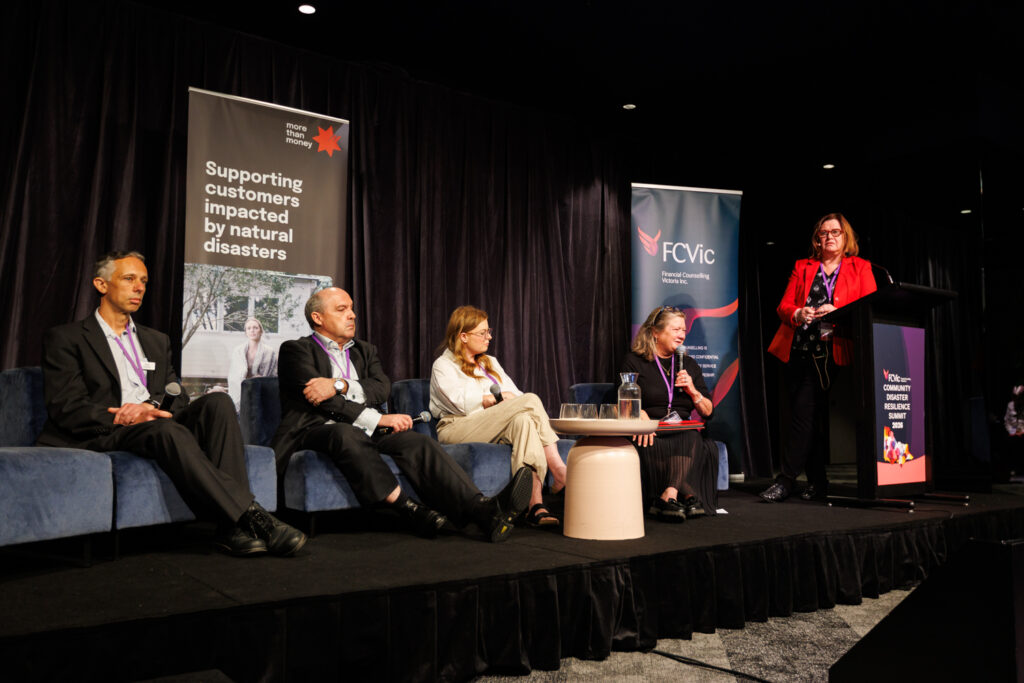
Joining our MC Dr Jacki Johnson on stage for a panel discussion on the treatment of cash settlements were:
- Brett Bertie, Commbank
- Annabelle Butler, Hollards
- Chris Liamos, AFCA
- Lylia Martion, Anglicare Victoria
While many policy discussions relating to insurance cash settlements typically focus on insurer behaviour (see: FCVic’s Unsettled report), this panel had a different focus – on the treatment of cash settlements once they are sent by the insurer to the bank or lender with whom the policy-holder has a mortgage.
Panellists grappled with the difficult balance of meeting individual needs in a fair and equitable in discovery recovery (e.g. support with rebuilding) with prudential obligations. What they all agreed on is that improved transparency at all stages would be to the benefit of the consumer, e.g. clear information provided at the point of taking out a mortgage, at the start of an insurance claim, when a cash settlement is offered.
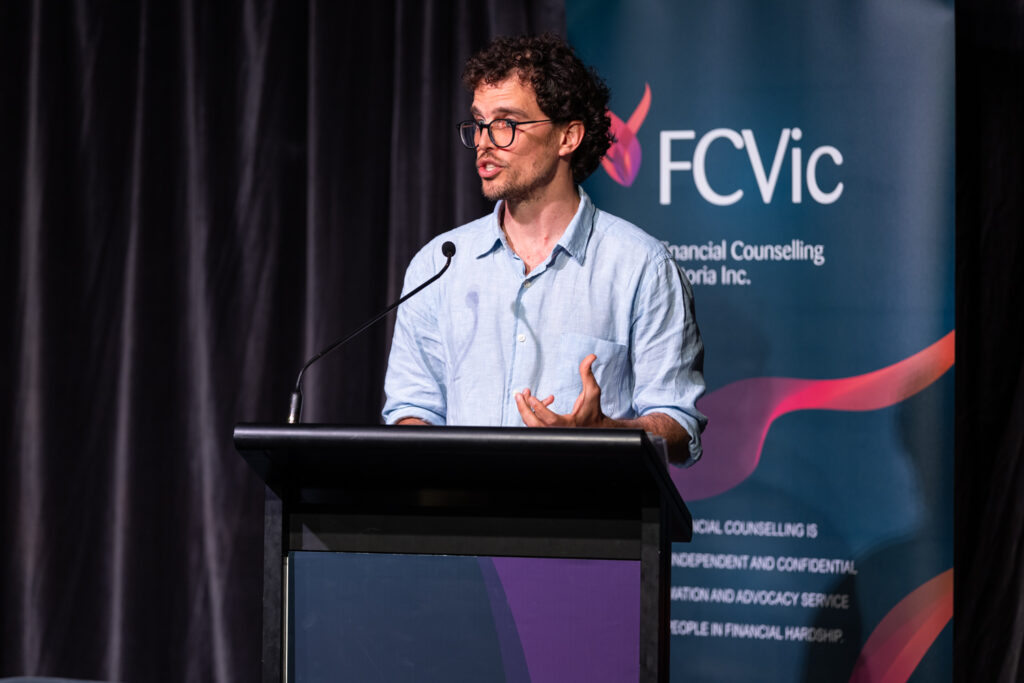
Callum Fleming, mental health practitioner, shared his experience working in mental health recovery after the Rochester floods of 2022. He reflected that traditional service models where people are expected to seek help often fail in rural communities due to stigma, privacy concerns, and practical barriers. He emphasised a key lesson: that support must go to communities, not wait for communities to come.
By meeting people in familiar, trusted spaces like sporting clubs and local venues, his team built relationships that enabled meaningful support. He highlighted the power of community connection, where recovery is driven not just by professionals but by neighbours supporting each other, strengthening resilience through trust and shared experience.
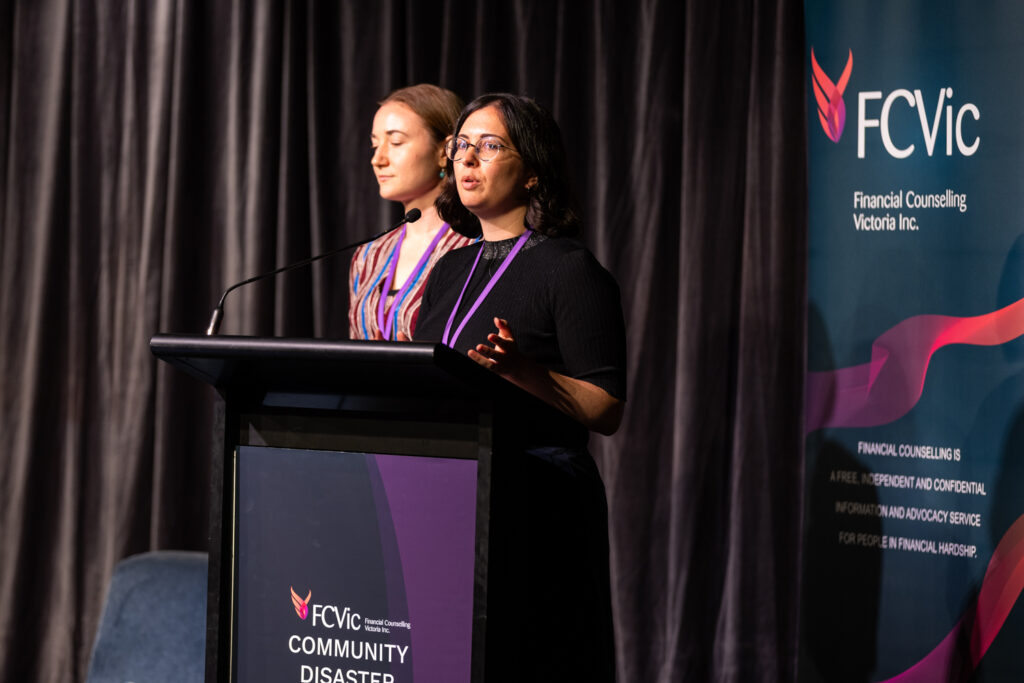
Lucy Manne and Julianne Tice from VCOSS presented new and upcoming research on the long-term impacts of the 2022 Victorian floods, showing disasters affect entire communities, not just directly impacted households. Their findings confirmed that impacts are unequal, with disadvantaged, First Nations, and culturally and linguistically diverse communities more likely to be affected. One year on, floods were linked to reduced incomes, increased poverty, unemployment, and worsening physical and mental health, highlighting how disasters deepen existing inequality.
They called for reforms focused on equity and resilience, including targeted investment, better access to information, and support for resilient housing. Emphasising lived experience, VCOSS stressed that many cannot recover without assistance, and that all sectors must work together to reduce risk and support fair, long-term recovery.
Read the Ripple Effects: Spatial injustice and the 2022 Victorian floods report: https://vcoss.org.au/climate-change-environment/2026/03/ripple-effects/
As closing speaker, Kate Cotter from the Resilient Building Council (RBC) explained their mission to make homes safer and more insurable by measuring and improving resilience. Formed after the 2009 Black Saturday bushfires, RBC developed the Resilience Ratings program, which provides a standardised way to assess risk and guide upgrades. These ratings help insurers, banks, and governments recognise risk reduction, enabling cheaper insurance, better access to finance, and more targeted investment in resilience.
RBC combines national systems with local action through its ‘Resilience Revolution’, bringing together communities, industry, and government. Tools like self-assessments and multi-hazard ratings give households clear actions to improve resilience. Future priorities include expanding access, integrating ratings into funding and insurance, and supporting low-income households.
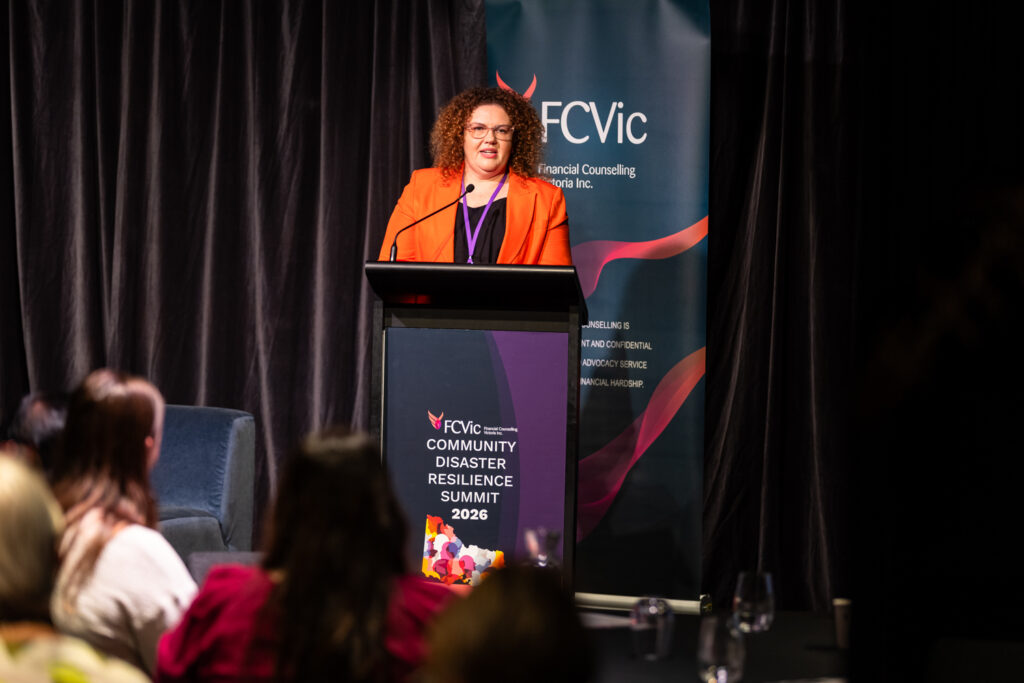
Our MC shared her summary of the themes that she heard throughout the day. About the importance of trust, and how it is build through transparency and communication, collaboration and innovation within the whole resilience ecosystem. She emphasised the important role that financial counsellors can play in preparing for and responding to disasters, and she centred the community at the heart of all disaster work.
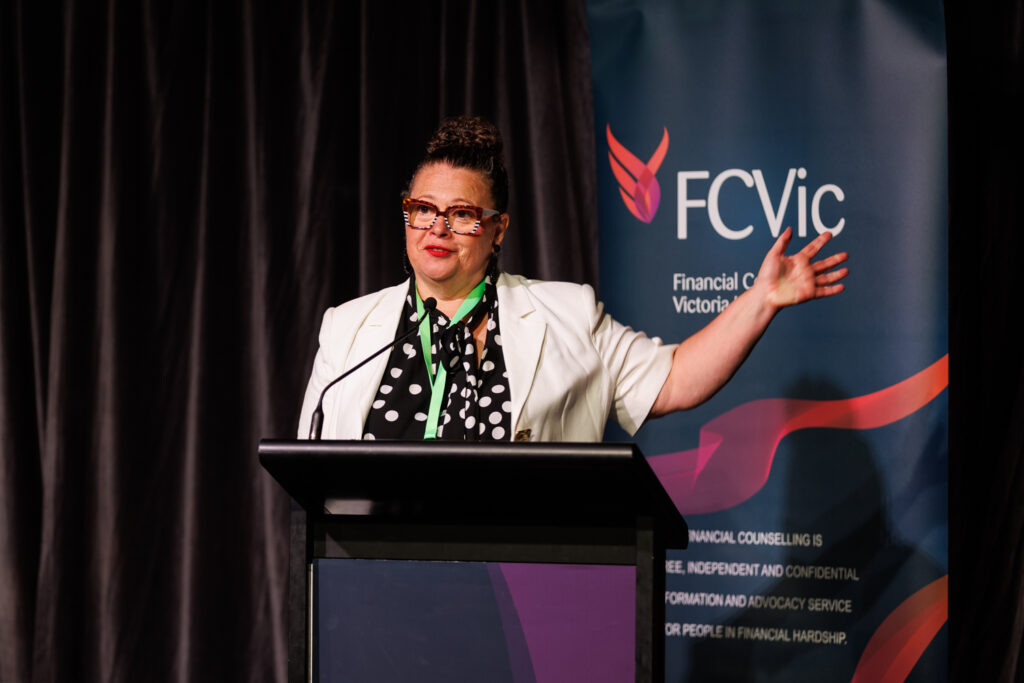
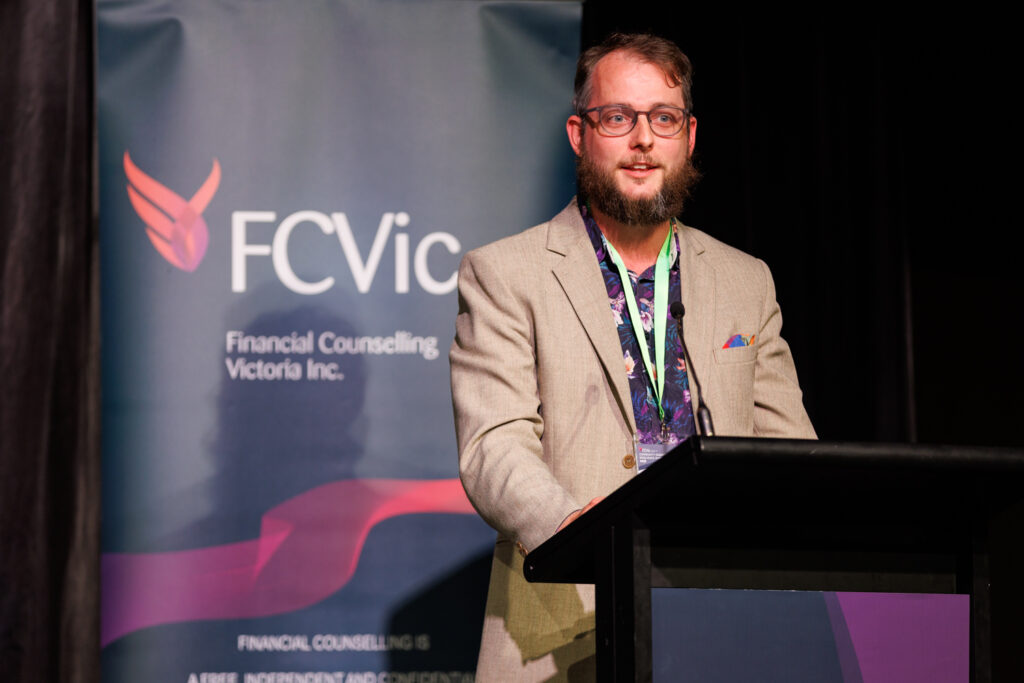
To formally close the conference, Zyl Hovenga-Wauchope, CEO of FCVic thanked all sponsors, speakers and participants for their attendance and shared commitment to better disaster resilience, preparedness and response.
We also launched our 2026 Conference theme, ‘In Pursuit’, to be held 8-9 October in Melbourne.

The Summit highlighted that while the challenges are complex, there is a strong foundation of expertise, collaboration and commitment across the sector. The conversations and connections from the day will continue to inform FCVic’s advocacy and work with our partners across different sectors and industries, supporting a more resilient future for all Victorians.


